
 Class: White
Origin: Doke Organic Farm, Kashanganj, India
Year: ?
Vendor: Lochan Tea Ltd.
Price: $9.30 (100g)
Verdict: 6.5/10
Dry Leaf:
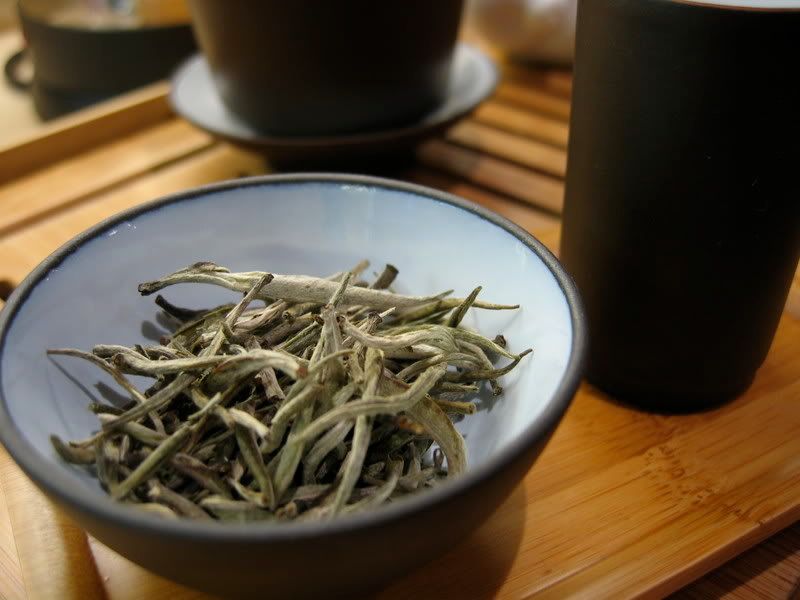
I don't know a lot about the different styles of snowbud, but to my untrained eye these leaves are quite pretty and reminiscent of silver needle (bai hao yin zhen). Unfortunately I have a head cold right now, so my olfactory senses are limited and I can't really pick up on any dry leaf aroma. Nevertheless, this tea is looking good so far.
 Parameters:
3.1g dry leaf; 170°F good tap water; 90s, 150s, 180s
Liquor:
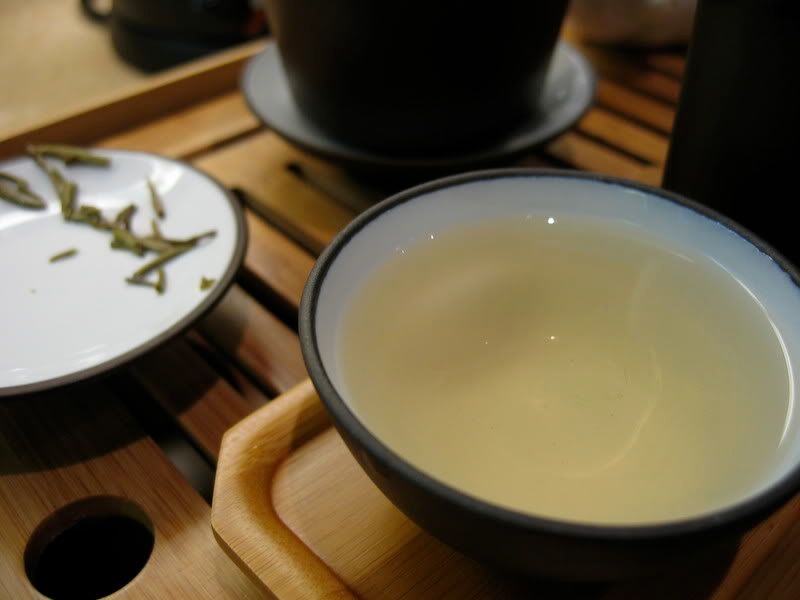
Not surprisingly, the liquor was nice and light. It reminded me of a light, sweet first flush Darjeeling, with a bit of a dancong-like perfumey astringency in the second infusion. The aroma cup initially smells of white sugar and vanilla, which develops into a very strong vanilla cake frosting aroma in the second infusion. By the third infusion, the liquor tasted like little more than sweet water. I probably could have given a fourth infusion more time to extract more flavor, but I felt that I had already gotten a good impression of the flavor so I didn't bother. I'm not much of a white tea fan since discovering the vast range of oolongs out there, but I can still appreciate the good quality of teas like this.
 Wet Leaf:
I know nothing about how wet white tea leaves/buds should look, so I won't even bother trying to analyze them. :) Still, here's a picture if you'd like to take a gander for yourself.
Overall Impression:
White teas aren't my favorite, but I liked this one. It had good flavor, and there was nothing offensive about it. The dancong-like edge was just enough to make me think, "hmm... interesting," and earned this tea a solid 6.5/10.
 Class: Oolong
Origin: Meghma Estate, Nepal
Year: 2007
Vendor: Lochan Tea or The Simple Leaf (sold as "Honeybee")
Price: $7.00 (100g)
Verdict: 4/10
Dry Leaf:
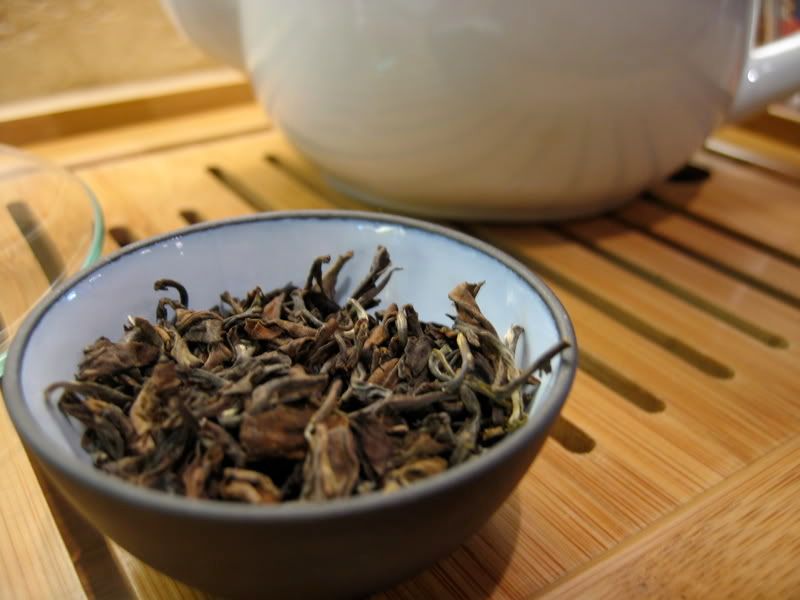
Looks almost exactly like an Autumnal Darjeeling, and smells similar too. The leaf color varies from near-white to dark brown, common in teas of this region (though I would think it has far more to do with processing than terroir). Pretty!
Parameters:
Oh boy. I've tried three different methods for brewing this tea: gongfu with long infusions (30+ seconds), European style with a big-honkin' cheap teapot, and gongfu with short infusions (10-15 seconds). Gongfu with long infusions was absolutely dreadful, and left me feeling a bit sick. Clearly, this tea is not meant to be brewed this way. I later tried brewing it European style (4g leaf; 8oz off-boiling water; 2:30, 1:00), and had more success. I tried gongfu one more time with shorter infusions, and got better results than the first attempt, but I couldn't seem to keep the infusion times short enough to enjoy the tea.
 Liquor:
During my gongfu attempts, the liquor was extremely woodsy tasting, and not in a good way. If I had to describe the woodsy flavor, I would say it's like a very insipid and alkaline thyme, but I'm not sure if that really makes any sense. When I brewed it European style, the liquor was much more similar to an Autumnal or second flush Darjeeling black tea (though its status as a black tea is debatable). Though there is still some woodsy flavor, it is much more subdued and a bit interesting. Perhaps if I hadn't already tasted it in concentrated form, I would have found it enjoyable and intriguing. At any rate, I found the second infusion to be particularly nice— no woodsy flavor, and a sweet fruitiness characterized this brew.
 Wet Leaf:
I was actually quite pleasantly surprised by the wet leaves of this tea. As you can see in the picture, there are many whole leaves and some intact leaves/bud/stem complexes. This tea certainly appears to be hand-picked. The leaves are a dark brown color, indicating a near-black tea level of oxidation.
Overall Impression:
While I can certainly see that this tea has been picked and processed with care, I simply didn't like it. Frankly, I felt a bit sick after my last gongfu attempt, which definitely does not earn it high marks. Still, I can't help but think that it's the Indian and not the arrow (yes, I realize the irony of using the word Indian in this context, but you know what I mean). Even my best results tasted lackluster compared to a good second flush Darjeeling, and after reading outstandingly positive comments by Phyll, I get the feeling I'm just brewing this wrong, so I can't give it an awful grade. So, instead, this tea gets a 3/10. I'm sure it gets better than this, but if it's this hard to get right, I don't think it's worth it.
Conclusion:
While I enjoyed the teas in the last T Ching Tea Tasting more, it's hard to whine about free tea. I had been curious about Indian/Nepalese oolong for some time now, and even though I may not have had the best experience, it was still worthwhile. The real dark horse winner in this tasting was the Doke white tea— I didn't expect much but I actually liked it quite a bit for a white tea. Once again, thanks to the great people at T Ching!


